
At scale, living systems respond to mixing, oxygen, heat, raw materials and operating conditions. A fermenter can look normal while the biology inside is already moving toward stress, lower productivity or failure.
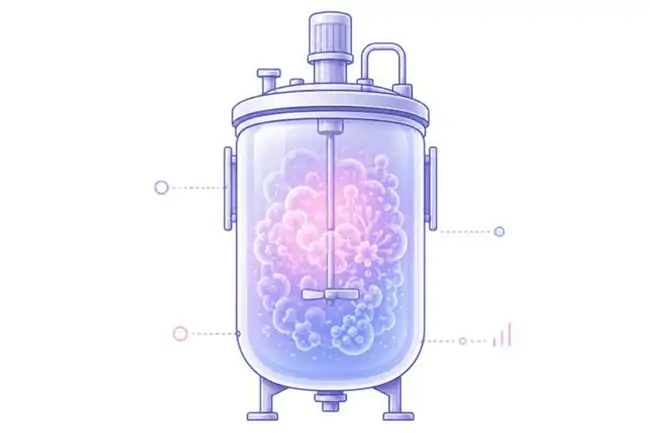
Individual measurements rarely reveal organism health or why a deviation is developing.
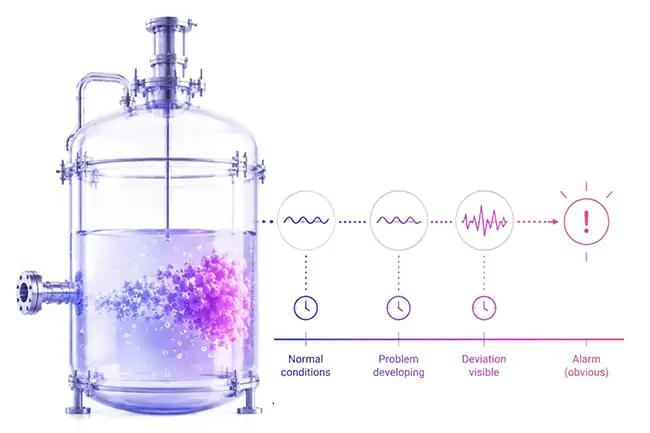
Problems can develop for hours before conventional signals make them obvious.
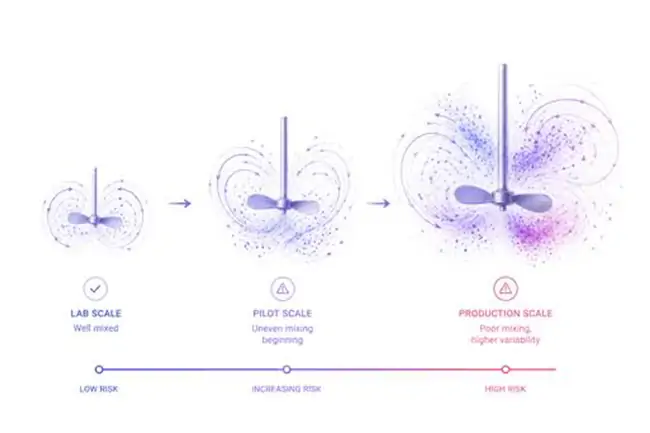
Processes change as mixing, transfer and vessel geometry change.
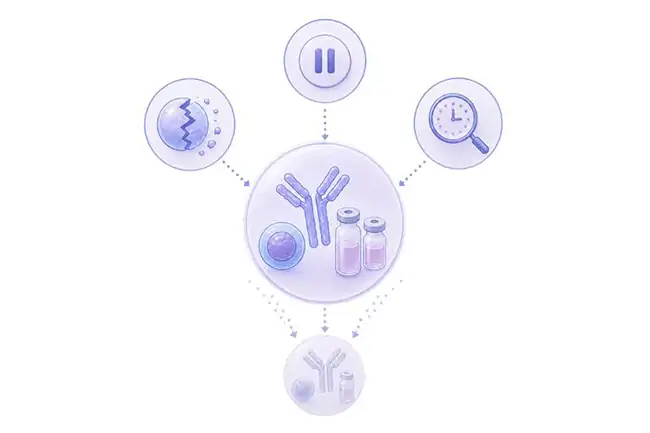
Failed batches, downtime, and slow investigations can make good products unviable.

The platform connects physical sensing inside the fermenter with process context, hybrid AI models and a staged decision-and-control layer.
Explore The Platform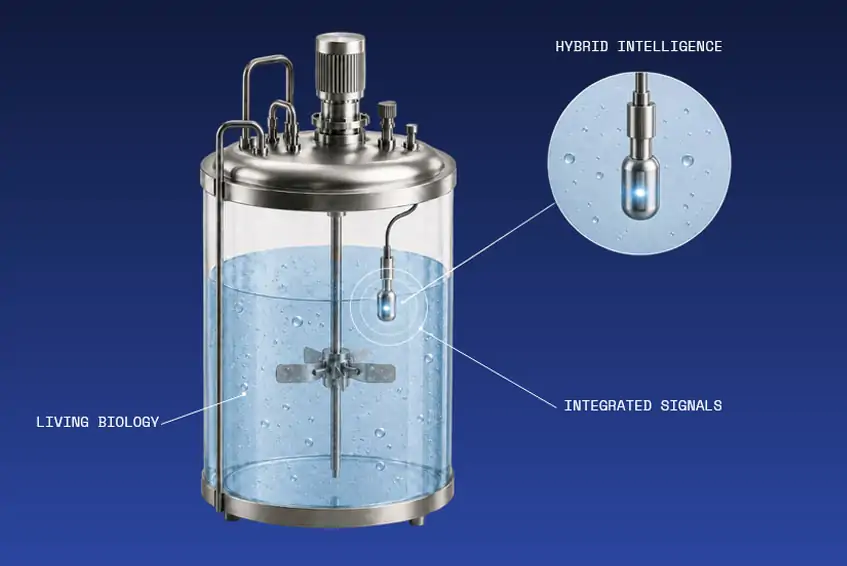
Capture process and biological signals from existing instrumentation.
Turn process, laboratory, equipment and historical data into biological insight.
Identify emerging patterns, deviations and process risk early.
Forecast batch trajectory, yield, quality and failure risk.
Evaluate operating choices and identify opportunities to improve process performance in real time.
Turn intelligence into action through recommendations and validated control.
Each application shows how Hyperferm transforms complex manufacturing challenges into actionable intelligence and improved process outcomes.
Most facilities measure individual variables. Those measurements do not automatically reveal the state of the organism, the cause of a deviation, or its probable effect on yield and quality.
The platform interprets many signals together as an integrated batch state, estimates organism health, and identifies combinations of signals that precede conventional alarms, with a severity indication and recommended attention.
Earlier intervention on developing problems, and a clearer view of batch health while there is still time to act.
Teams often learn the result of a run only after it completes, when the facility has already spent media, water, energy, labour, and equipment time.
The platform forecasts the probability of meeting yield, quality, and timing targets during the run and updates the forecast as the batch develops. It can classify batches and inform harvest timing and recovery decisions.
Expected yield and specification risk are visible earlier, supporting decisions on harvest timing and recovery.
Fixed control rules and manual interventions can leave yield, resource use, and productivity below what a process is capable of achieving.
The platform can recommend adjustments to feed strategy, media use, and operating parameters against objectives such as yield, productivity, quality, cost, energy use, water use, and asset utilisation.
More efficient use of feed, media, energy, water, and equipment, aiming at improved and more consistent productivity.
Processes change as they move from flasks to laboratory fermenters, pilot systems, and commercial vessels. Scale introduces differences in mixing, oxygen and heat transfer, pressure, gradients, geometry, and control response.
The platform connects data across scales and uses digital twins to evaluate operating strategies before they are applied, helping identify scale-dependent risks during transfer between equipment and facilities.
More reliable progression from laboratory to pilot and commercial production, with scale-dependent risks identified earlier.
Continuous and intensified processes can raise equipment utilisation and productivity, but they must remain stable for extended periods, which requires stronger monitoring and control.
The platform provides long-duration monitoring, stability tracking, and the prediction and control capabilities needed to run these processes with greater confidence.
Support for stable, well-utilised continuous and intensified operation over long production periods.
Process knowledge is often held by experienced individuals and scattered across disconnected records, which slows investigations and handovers.
The platform compares batches against historical runs, retrieves similar past events, supports root-cause investigation, retains process knowledge, and helps generate batch summaries and shift handovers.
Faster investigations, better retained process knowledge, and clearer handovers between shifts and teams.
The platform architecture is designed to support fermentation-derived products across multiple industries.
Precision fermentation for dairy, meat, and next-gen protein production.

Renewable polymers, fibers, and biomaterials at commercial scale.
Microbial production of high-value chemical compounds
Stable enzyme manufacturing with better yield control.
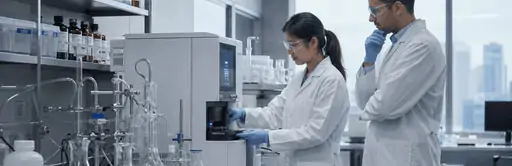
Consistent production of flavors, cultures, enzymes, and additives.
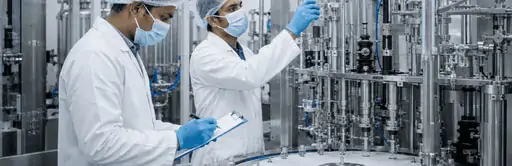
Controlled production of probiotics, vitamins, and bioactive ingredients.
Hyperferm AI is designed to connect with available probes, controllers, SCADA and DCS, historians, MES and laboratory workflows supporting cloud, edge or hybrid deployment.
Use available ports and connect with the control, historian and laboratory systems already in place.
Support heterogeneous facilities without forcing an all-or-nothing equipment replacement.
Progress from monitoring to human-approved recommendations and validated closed-loop control.